Lowering manufacturing costs doesn’t always require new equipment, fewer people, or harder schedules. Some of the most meaningful savings come from re-examining things you’ve stopped questioning, long-standing software contracts, subscription fees that no longer make sense, and process settings that were changed years ago for reasons that no longer apply. This article covers two practical ways to find that hidden margin: auditing your recurring expenses against today’s market, and running a focused Green Belt project on a single source of process waste. It includes a real-world example from a polyethylene line and a checklist of questions to put to your own operation.
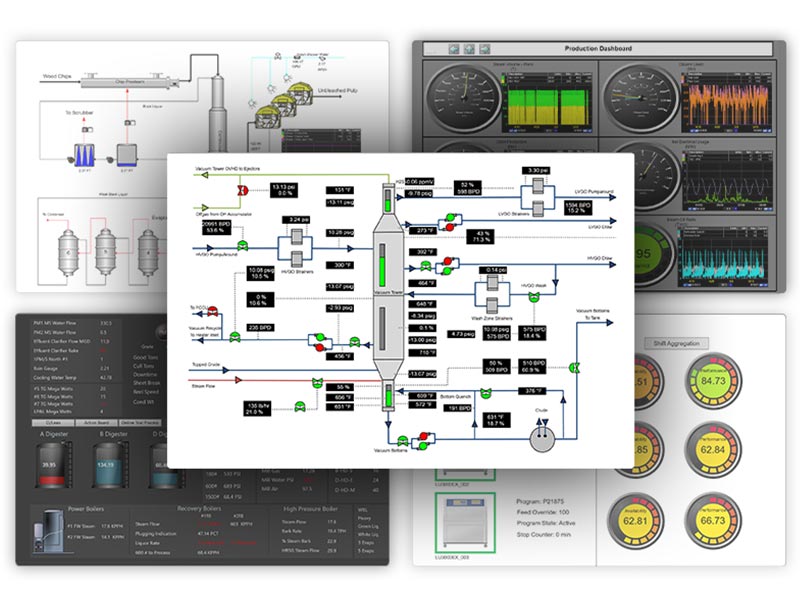
Break Data Silos and Gain Real-Time Visibility Across Your Enterprise with PARCview
Margins in manufacturing are getting squeezed from every direction. Raw material costs swing. Energy isn’t getting any cheaper. Customers want better quality at lower prices. And the easy answer everyone reaches for is to cut headcount, run faster, push the equipment harder; usually, these solutions create more problems than they solve.
Here’s the good news: there’s often real money sitting in your operation right now, and finding it doesn’t require changing how the factory runs. It just requires looking at a few things you’ve stopped questioning. Below are two angles worth a serious second look, your recurring expenses and your everyday process losses, plus a real story from a polyethylene line that saved a surprising amount by changing exactly one thing.
Audit the bills you’ve been paying on autopilot
Think about car insurance for a second. Most people pay the same provider for years without checking whether the rate is still competitive. Then one day, they shop around and find out they’ve been overpaying by 30 percent. That same pattern shows up in manufacturing all the time, just with bigger numbers attached.
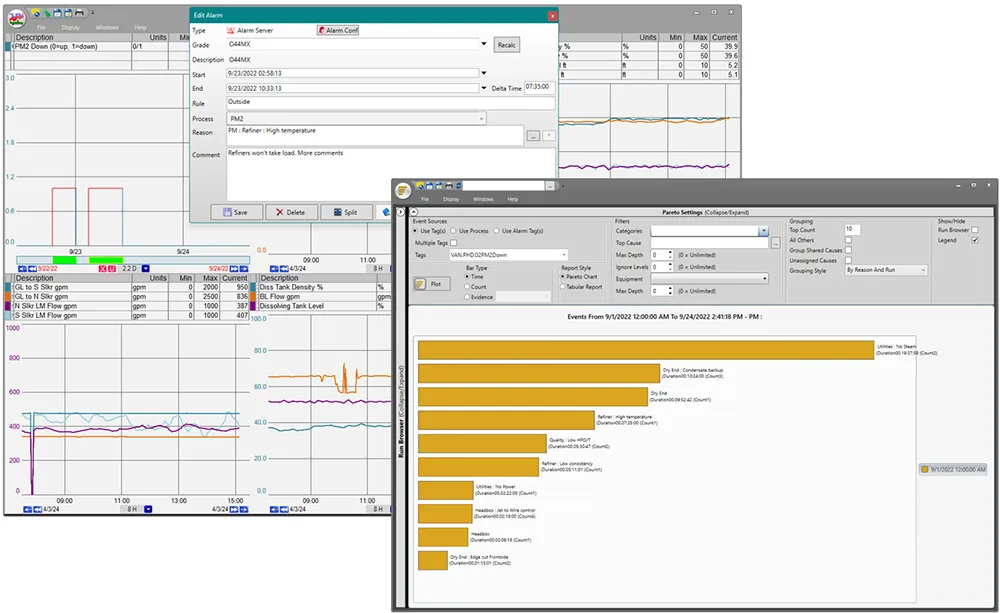
Is your software allowing you to navigate quickly from problem to solution? PARCview trends are the jumping-off point to process analytics.
Pull a list of your top recurring expenses. Anything you pay every month or every year, regardless of whether you use more of it. Then ask, for each one: if I were buying this fresh today, with what I know now, would I pick the same vendor and the same pricing model? Some categories worth a hard look:
- Visualization and HMI software. Tools you bought years ago may have aging interfaces, limited integration, or pricing that doesn’t reflect today’s market. Newer options are often faster to configure and easier on your operators and engineers’ time.
- Process historian. Your historian is the foundation of every analytics effort downstream. If yours is slow, hard to query, or priced in a subscription, that’s worth pricing out against modern alternatives. dataPARC, for example, was built specifically around the way manufacturing teams actually use historian data, quick queries, easy trending, no per-user tax for accessing the data.
- Chemicals and consumables. These make sense as ongoing purchases, you really are consuming more product. But when did you last benchmark price-per-unit, dosing rates, or supplier terms? Even a small per-unit improvement compounds fast across a year.
- Subscription vs. perpetual licensing. This one deserves its own paragraph.
Subscription pricing has quietly become the default for almost every piece of industrial software. And for some things, that makes sense, you’re getting continuous updates, hosted infrastructure, or a service that costs the vendor money to keep running. But for a lot of plant-floor tools, you’re paying a monthly fee for software that doesn’t fundamentally change month to month. You’re not consuming more of it. You’re just renting something you used to own.
Run the total cost of ownership math over a 5- or 10-year window. For tools you’ll use for the long haul, perpetual licensing with a maintenance plan is often dramatically cheaper than an equivalent subscription. We’ve gotten so conditioned to monthly fees that we forget to ask whether they make sense for what we’re actually buying.
Look at your process losses with fresh eyes
The other place margin hides is inside your existing process. Every pound of off-grade product, every hour of unplanned downtime, every batch that has to be reworked is money you already spent that didn’t turn into sellable product. You don’t need a capital project to attack this. You need focus.
Pick one Green Belt-style project. One. Not a list of twelve initiatives. One specific source of waste or variability that’s been bugging you, and a small team with the time to actually dig in. Define the problem narrowly, measure the baseline, look for root causes, test a change, and verify it sticks. The discipline of doing one project well almost always beats doing five at half-effort.
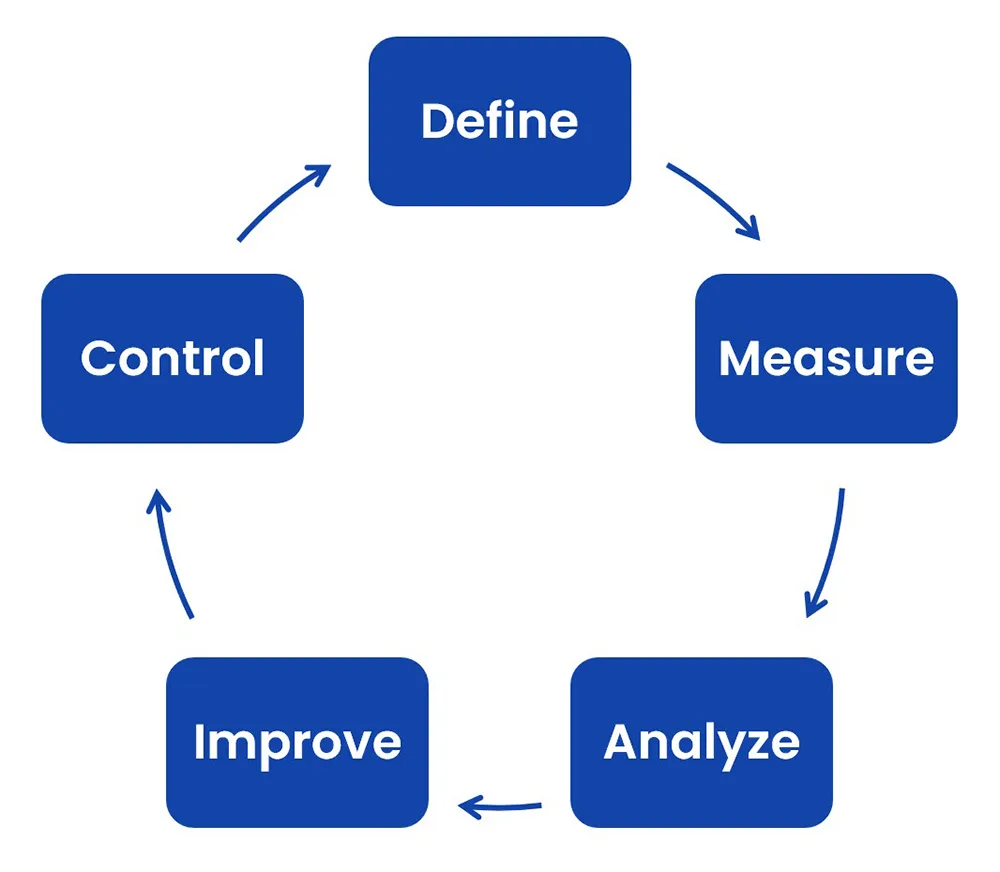
The DMAIC process is a standard process for continuous improvement projects.
Good candidates usually share a few traits: the loss is recurring, you have data on it (or could start collecting some quickly), and the fix doesn’t require a capital request. Reducing overage on a coating. Cutting off-spec product at startup. Trimming the changeover time on the most-run product. Eliminating a quality check that no longer catches anything because the upstream issue was fixed years ago.
A real example: one applicator, one savings
Here’s a quick example that shows how small the change can be and how big the payoff can get.
A site was running a Green Belt project to reduce overage on a polyethylene application. They were using more product per unit than the spec called for, and the extra cost was adding up. The team expected to find the answer in dosing settings, line speed, or maybe operator technique. Instead, when they walked the line and looked at the equipment, they found something nobody had noticed.
The applicator on the line wasn’t a standard one. It had been swapped out about five years earlier to support a different product variant, one that the plant no longer made. When that product was discontinued, the applicator was never swapped back. The line had been running a mismatched applicator for years, applying more polyethylene than the current product needed, and everyone had just accepted the resulting overage as normal.
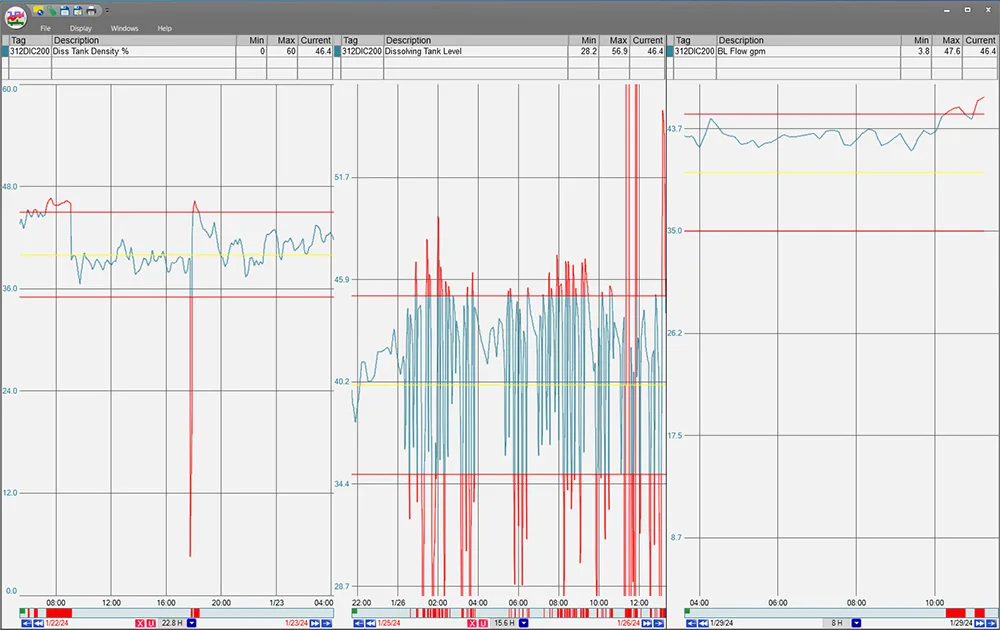
Trending data with limits quickly allows the user to identify when values are out of spec.
The fix? Reinstall the standard applicator. No new purchase. No capital request. Just putting back the equipment that had been sitting on a shelf in the spare parts cage. The savings ran into the hundreds of thousands annually, on one line, from one change.
The takeaway isn’t that you have a wrong applicator somewhere; maybe you do, maybe you don’t. The takeaway is that decisions made in the past for good reasons at the time can stop making sense without anyone noticing. Process changes pile up. Settings drift. Equipment gets swapped to handle one customer’s order and never gets swapped back. A regular habit of asking “is this still the right setup?” is one of the cheapest sources of margin you have.
Thinking about an Industrial Data Platform? Let our Smart Factory guide your way.
A short checklist to get started
If you want to put this into practice this quarter, here are the questions worth walking through:
- What are my top 10 recurring expenses, and when did I last benchmark each one against an alternative?
- Where am I paying subscription fees for tools that don’t meaningfully change month to month? Would perpetual licensing be cheaper over 5 to 10 years?
- Which of my software vendors charges based on usage I’m not actually generating, per user, per seat, and could a different pricing model save real money?
- What’s the single biggest recurring source of off-grade or reworked product, and do I have data on it?
- Where in the plant has a setting, recipe, or piece of equipment been changed in the past for a reason that no longer applies?
- If I picked one Green Belt project to run this quarter, what would have the biggest payback for the smallest investment?
Where dataPARC fits
At dataPARC, we’ve spent a lot of years helping lower manufacturing costs, the kind that’s already in the plant, waiting to be noticed. Our platform gives engineers the visibility to spot recurring losses, track them down to the root cause, and prove the fix worked. And our licensing model is built on the idea that the software you rely on every day shouldn’t get more expensive every year just because the industry decided to move to subscriptions.
If you’d like to talk through where the margin might be hiding in your operation, or what it would look like to move off a subscription model for a tool you’ll be using for the next decade, we’d be glad to walk through it with you.
FAQ: Reducing Operating Costs
- How can I lower manufacturing costs without buying new equipment or cutting staff?
Start by auditing two areas you may have stopped questioning: your recurring expenses (software, chemicals, historian, subscriptions) and your everyday process losses (off-grade product, downtime, overage). Both often hold meaningful savings that don’t require capital spending or operational disruption. - Is perpetual licensing really cheaper than a software subscription?
For tools you’ll use long-term, usually yes. Run the math over a 5- to 10-year window. Subscription pricing makes sense when the vendor is delivering continuous service or hosted infrastructure, but for plant-floor software that doesn’t fundamentally change month to month, perpetual licensing with a maintenance plan is often dramatically cheaper over time. - What’s the easiest cost-reduction project to start with?
Pick one Green Belt-style project, a single recurring loss you already have some data on, with a fix that doesn’t require a capital request. Common high-payback candidates include reducing overage, cutting off-spec product at startup, or eliminating quality checks that no longer catch anything. - How do I know if our process historian or visualization software is overpriced?
Compare on three dimensions: pricing model (cost per user, punishes you for using your own data), total cost of ownership over 5–10 years (subscription vs. perpetual), and engineering time spent configuring or working around the tool. If you can’t easily benchmark against alternatives, that itself is a signal worth investigating. - Why does outdated equipment cause hidden costs even when it’s still running?
Decisions made in the past, changing a recipe for a one-off customer order, adjusting settings for a maintenance issue, often outlive their original reason. The line keeps running, but you’re paying for a setup that no longer matches what you’re making. A regular habit of asking “is this still the right configuration?” is one of the cheapest sources of margin you have.
Building The Smart Factory
A Guide to Technology and Software in Manufacturing for a Data-Drive Plant