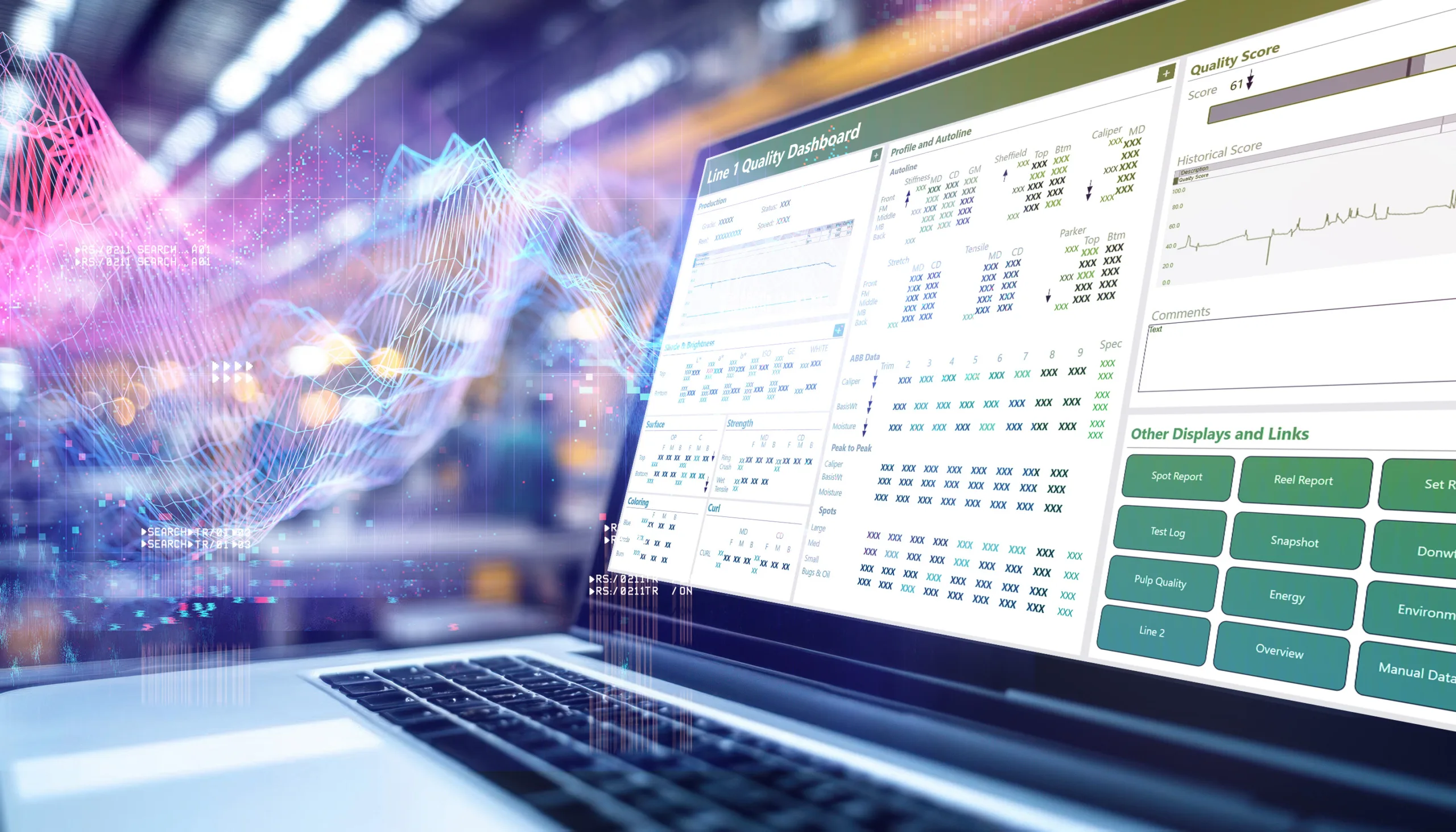
Manufacturers using ePREXION for data collection often find themselves searching for alternatives that deliver more than just storage capabilities. This article will explore some ePREXION alternatives for those looking to get more out of their plant information management system. Learn how dataPARC provides the integrated historian, visualization, and analytics platform that transforms data from archived information into actionable insights across your entire organization.
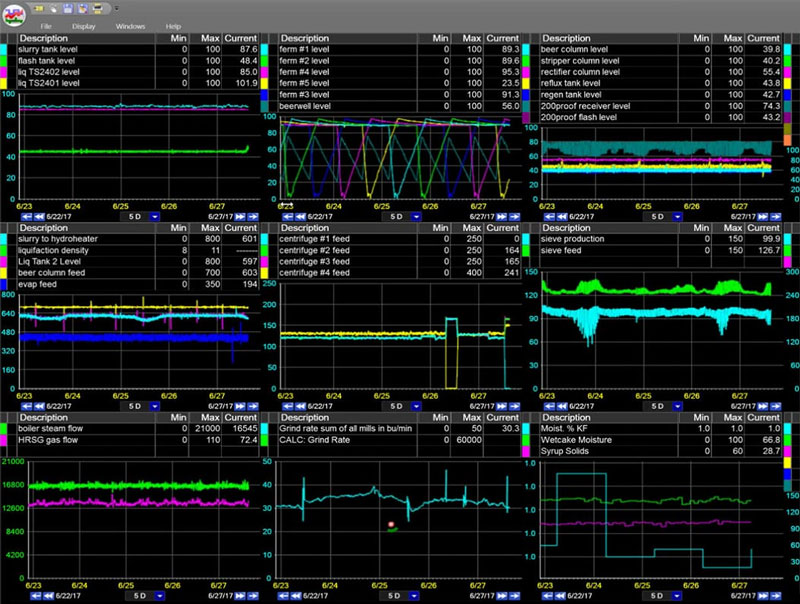
Check out dataPARC’s real-time process data analytics tools & see how better data can lead to better decisions.
Why Manufacturers Look for an ePREXION Alternative
ePREXION serves a purpose, it collects process data from control systems and stores it for later use. For organizations that simply need data archived, this works fine. But most manufacturers quickly discover that collecting and storing data is only the first step. If they are on a true digital transformation journey, they find that the real value comes from using that data to make decisions, troubleshoot problems, optimize processes, and drive improvements.
The frustration emerges in how time consuming viewing and processing data can be. You can spend hours exporting data to Excel to create a simple trend comparison. IT support might be needed to access basic information. Or if quality managers can’t easily correlate process conditions with product results. When multi-site manufacturers struggle to compare performance because data lacks consistent meaning across locations.
Organizations start looking for ePREXION alternatives when they realize that a system focused primarily on data collection creates a gap between having data and using data. Modern manufacturing demands integrated platforms where visualization, analysis, and operational decision-making happen seamlessly, not systems that collect information and leave users to figure out what to do with it through external tools.
dataPARC as an ePREXION Alternative
dataPARC provides what ePREXION users need but don’t have: a complete industrial data platform where collection, visualization, and analytics work together in one integrated solution.
Historian Functionality
Complete historian functionality means dataPARC handles data collection like ePREXION, but with enterprise-scale architecture built in from the start. Sub-second data capture, efficient compression, store-and-forward capabilities, and data integrity features ensure reliable operational data. The difference is the dataPARC historian scales seamlessly from single plants to multi-site, distributed deployments without requiring separate systems or complex integrations.
Integrated Visualization
Integrated visualization eliminates the external tool dependency that can frustrate ePREXION users. Advanced trending, customizable dashboards, and real-time monitoring exist natively in the platform. Engineers don’t export data to Excel for analysis—they trend multiple variables, identify correlations, and investigate issues directly in dataPARC. Operations teams don’t wait for IT to create reports—they build their own dashboards with drag-and-drop simplicity. Quality managers access process data alongside lab results without switching applications. Mobile access through PARCview Nexus extends the platform beyond the control room to wherever decisions happen.
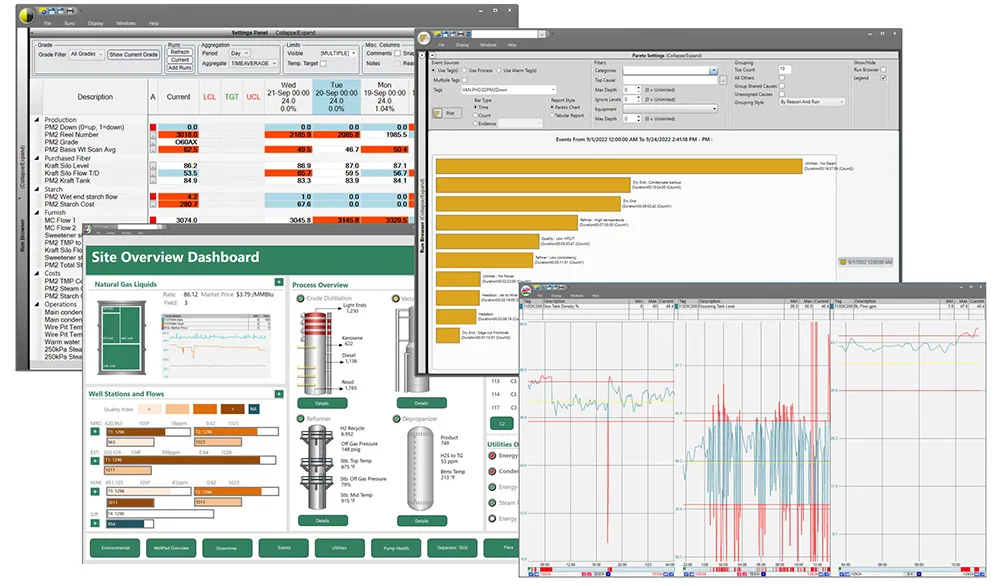
PARCview offers data visualization and analysis in one package, including Parteo, Limits integration, Dashboards, and Centerlining displays.
Built-in Analytics & Calculations
Analytics and calculations already built in provide the analytical depth. dataPARC’s calculation engine creates virtual tags and KPIs that update in real-time as data streams in. Statistical analysis, SPC charts, and comparative analytics are native platform capabilities, not afterthoughts requiring third-party software. Complex calculations that would require custom Excel macros in ePREXION or other environments are standardized, reusable logic in dataPARC.
Organization-Wide Accessibility
This is your data, and everyone who needs access should have it. ePREXION typically serves a small group with technical skills and database access. dataPARC serves everyone, from operators viewing real-time trends, engineers conducting root cause analysis, quality teams monitoring process conditions, maintenance accessing equipment history, to management reviewing KPI dashboards. Intuitive interfaces require minimal training. Role-based customization delivers relevant information without overwhelming users. Data democratization replaces IT-dependent access.
Enterprise Architecture
Enterprise architecture addresses the multi-site challenges ePREXION wasn’t designed to solve. Enterprise scalability matters when organizations grow beyond single-plant operations.
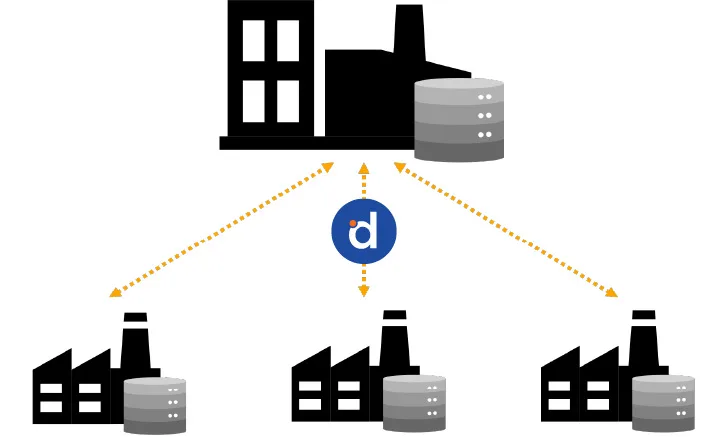
Your data should grow with you, whether you are a single site or multiple sites needing to feed data to corporate for KPIs and reporting. dataPARC has the scalability.
The Real Difference: Collection vs. Complete Platform
The fundamental distinction between ePREXION and dataPARC isn’t about individual features, it’s about philosophy and purpose.
ePREXION’s Approach
ePREXION’s approach focuses on collecting process data from control systems and storing it in an open format that external tools can access. The assumption is that users will export data to Excel, Access, or web-based tools for actual analysis and visualization. This collection-first model works when data archival is the primary goal and organizations have accepted that data usage requires separate systems and manual processes.
dataPARC’s Approach
dataPARC treats data collection as the foundation, not the end goal. The platform integrates historian capabilities with the visualization, analytics, and accessibility features that turn collected data into operational value. Users don’t export data to analyze it (though you can export to Excel when necessary), they work directly with live and historical information through tools designed specifically for industrial decision-making. This integrated model works when organizations want data to drive daily improvements, not just exist in storage.
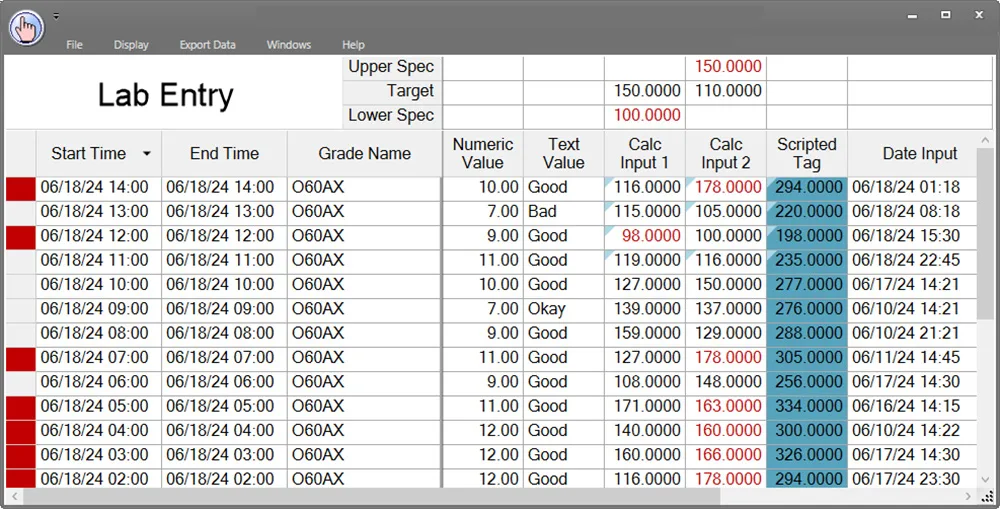
Lab data can also be entered directly into PARCview, no need for another system. See your lab data alongside your process data.
The difference shows up in daily operations. ePREXION users ask “how do I get this data into Excel?” dataPARC users ask “what does this data tell me about my process?” One approach creates data archaeologists who spend time gathering information. The other creates data-driven operations teams who spend time acting on insights.
For manufacturers evaluating alternatives, the question becomes: Do you need a system that collects data, or a platform that empowers your organization to use it? If stored data alone solved operational challenges, ePREXION would be sufficient. When the goal is turning data into better decisions, faster troubleshooting, consistent quality, and measurable improvements, complete platforms like dataPARC become necessary.
Conclusion: Beyond Basic PIMS
ePREXION solves the data collection problem. dataPARC solves the data utilization problem. Modern manufacturing requires both capabilities, but they need to work together seamlessly rather than forcing users to bridge gaps through manual exports and external tools.
The investment in complete industrial data infrastructure pays off through adoption and action. When engineers troubleshoot faster because trending is immediate, when operators make better adjustments because context is clear, when quality catches issues earlier because correlations are visible, when management makes confident decisions because information is trustworthy, that’s when data infrastructure delivers ROI.
Organizations looking for ePREXION alternatives typically aren’t dissatisfied with data collection reliability. They’re frustrated by everything that happens after collection. They’ve realized that having data and using data are fundamentally different challenges requiring fundamentally different solutions.
If your team exports data to Excel for every analysis, if accessing trends requires IT intervention, if multi-site comparisons feel impossible, if only a handful of people actually use your PIMS, you don’t need better data collection. You need a complete industrial data platform that makes collection just the first step toward operational excellence.
Ready to see how dataPARC transforms data collection into organizational capability? Request a demo to experience integrated historian, visualization, and analytics working together in one platform.
FAQ: ePREXION Alternatives
- Is dataPARC a direct replacement for ePREXION?
dataPARC’s PARCview platform covers the core use cases most manufacturers rely on ePREXION for and more including real-time dashboards, KPI visualization, trending, and analysis. For operations that need a straightforward, high-performance visualization and analytics layer on top of their historian, PARCview is a strong alternative. - Can dataPARC connect to my existing historian?
Yes. PARCview connects to the dataPARC historian and other common historian platforms. If you’re running OSIsoft PI or another third-party historian, dataPARC can typically connect to it directly. This means you don’t necessarily have to replace your historian and your visualization layer at the same time. - Is dataPARC only for large manufacturers?
No, dataPARC isn’t only for large manufacturers. PARCview and the dataPARC Historian are used by manufacturers ranging from single-site operations to large multi-site enterprises. One of the advantages of dataPARC over platforms like XHQ is that it scales with you; you’re not paying for enterprise complexity you don’t need on day one. - How do I know if dataPARC is the right fit for my operation?
dataPARC offers demos where you can walk through your specific requirements and see how PARCview handles them. That’s a much better basis for a decision than a feature comparison spreadsheet alone.
Building The Smart Factory
A Guide to Technology and Software in Manufacturing for a Data-Drive Plant