In this blog, we explore how the role of industrial historians is evolving from simple data collection tools to strategic assets that support analytics, enterprise visibility, and real-time decision-making. We examine why organizations may seek a Canary historian alternative, and how modern enterprise analytics platforms like dataPARC help manufacturers unlock actionable insights, improve operational performance, and future-proof their data ecosystem.
Fast, scalable data historian at a fraction of the cost. Check out the dataPARC Historian.
Signs You’ve Outgrown Your Canary Historian
For many manufacturers, Canary provided an accessible starting point for historian adoption. It delivers reliable data collection without the cost and complexity of enterprise platforms.
But as operations mature, expectations shift. Teams move beyond simple data storage toward contextualized insights, enterprise visibility, and advanced analytics.
If your organization is experiencing growth in data volume, users, or performance expectations, you may be noticing limitations that signal it is time to find a Canary Historian alternative.
1. Visualization Needs Are Outpacing Basic Trending
Operators and engineers increasingly rely on visualization to troubleshoot and optimize processes. However, basic trending capabilities can restrict deeper analysis workflows.
Batch overlays, parameter correlation, and interactive displays often require workarounds or Excel exports rather than being native capabilities. This slows investigations and introduces friction into daily decision-making.
2. Multi-Site Expansion Requires Custom Engineering
Scaling across multiple facilities can introduce complexity when enterprise features are limited.
Standardization frequently depends on custom pipelines, manual configuration replication, and maintaining isolated site implementations. Without centralized management or a unified data model, enterprise visibility becomes difficult to achieve.
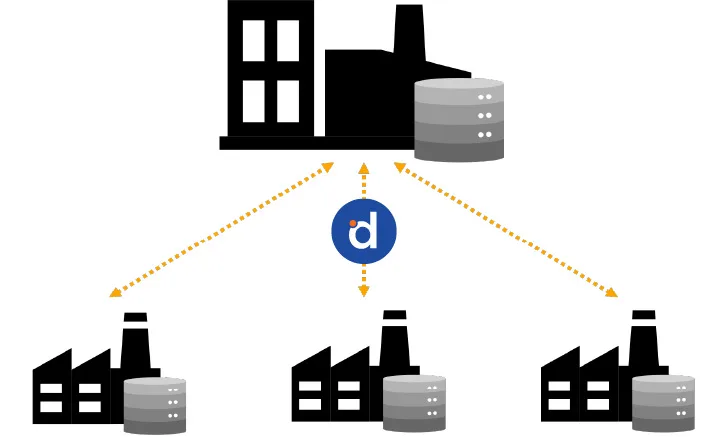
dataPARC’s enterprise data historian can be integrated into a multi-site operation, allowing corporate or other locations to view data across sites as needed.
3. Asset Context Exists Outside the Historian
As organizations mature, contextualizing data through asset structures becomes critical.
When equipment hierarchies, area models, and KPI rollups live in spreadsheets or external systems, enterprise reporting turns into a manual aggregation exercise. The lack of centralized asset modeling limits both analytics and scalability.
4. Analytics Depend on Third-Party Tools
Manufacturers increasingly expect analytics to live alongside their historian data.
Capabilities such as statistical process control, advanced correlation analysis, and batch comparison often require separate tools and integrations. This creates fragmented workflows, slows root cause investigations, and increases system complexity.
5. Engineers Spend More Time Building Than Analyzing
Custom scripting can quickly consume valuable engineering resources.
Building dashboards, calculations, and visualization layers through code shifts focus away from process improvement. Instead of extracting insights, engineers become system maintainers.
6. Scalability and Performance Questions Are Emerging
As data volume and user adoption grow, performance expectations evolve.
Slower historical retrieval, challenges supporting large user bases, and uncertainty around future scalability can indicate that the platform is no longer aligned with operational needs.
7. The True Cost of Ownership Is Increasing
Initial affordability can shift as operational complexity grows.
Third-party tools, custom integrations, ongoing maintenance, and engineering time gradually erode the original price advantage. Over time, the total cost of ownership may exceed expectations.
Why dataPARC is a Natural Alternative to Canary
As manufacturing organizations mature, expectations from a historian expand beyond simple data storage. Teams begin looking for contextualized data, enterprise visibility, and built-in analytics that support troubleshooting and optimization without relying on multiple external tools.
While Canary provides a cost-effective entry into historian adoption, many organizations reach a point where its design limitations begin to surface. This is where dataPARC extends beyond what Canary was designed to provide.
See how upgrading from your Canary historian to dataPARC can unlock richer analytics, enterprise-wide visibility, and more!
Enterprise Licensing Built for Growth
A key limitation organizations encounter with Canary is the lack of asset modeling and contextual data structures. Equipment hierarchies, KPI rollups, and area relationships often exist outside the historian in spreadsheets or custom-built systems.
dataPARC addresses this gap with enterprise-grade data management, including centralized data and asset modeling. By embedding context directly into the platform, organizations can eliminate manual aggregation, standardize reporting, and support scalable analytics across facilities.
This becomes particularly important for teams:
- Managing complex enterprise environments
- Outgrowing a basic historian
- Seeking centralized data models
- Avoiding custom-coded rollups
Rich Analytics Without Third-Party Dependencies
Another common challenge with Canary deployments is limited native analytics, often requiring separate tools for statistical analysis, batch comparison, and process optimization workflows.
dataPARC integrates advanced analytics directly into the platform, providing operators and engineers with deeper troubleshooting capabilities without fragmented workflows.
Built-in capabilities include:
- Batch and run analysis through Run Browser
- Target monitoring and process discipline with Centerline
- Statistical and correlation analysis
- KPI calculations and event-based analytics
- Operator-focused troubleshooting workflows
This consolidation reduces integration overhead while accelerating root cause analysis and process improvement.
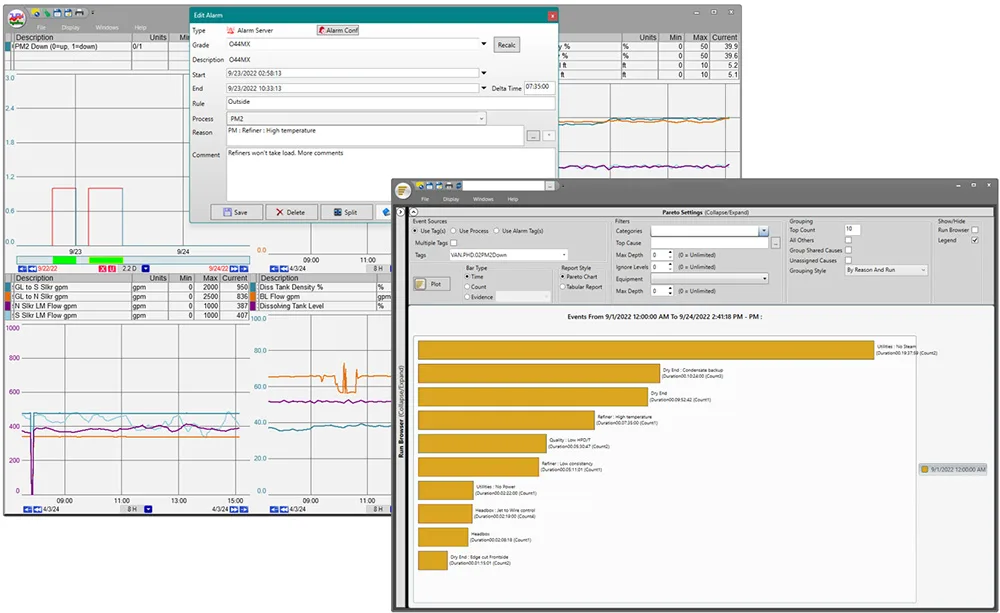
Downtime can be captured with PARCview, meaning process data, downtime data and lab data is all in one place, making it easy to troubshoot issues and find the root cause.
Visualization Without Custom Scripting
Visualization requirements often evolve as operations mature. While Canary implementations typically rely on basic trending and custom configuration for advanced displays, dataPARC enables rich visualization without scripting.
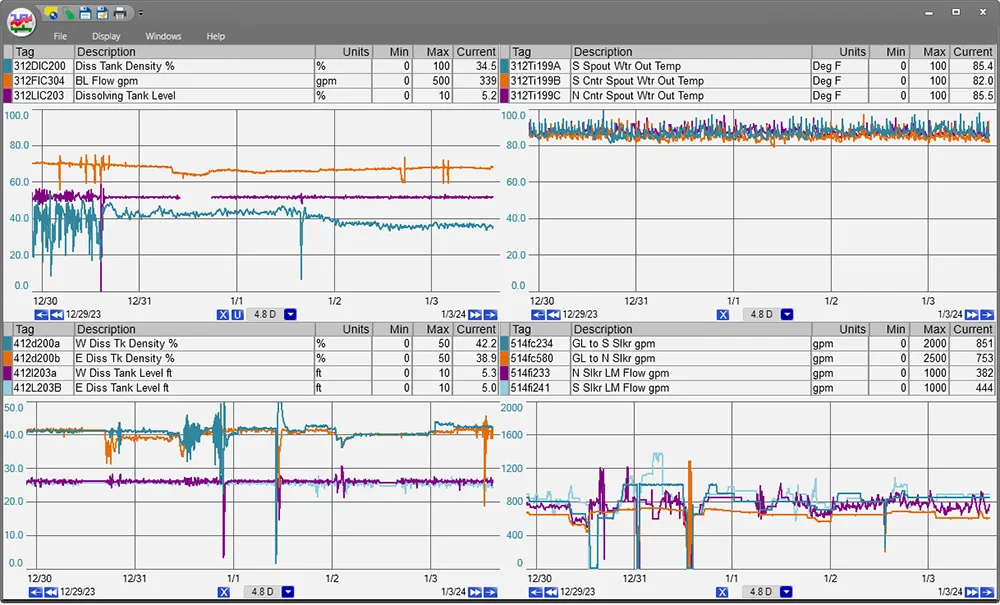
With PARCview, teams can create interactive dashboards, overlays, and contextual displays using low-code configuration. This shifts engineering effort away from maintaining custom code and toward process optimization. However, there is still the option to use code for custom graphics; it is just not the first step in the process.
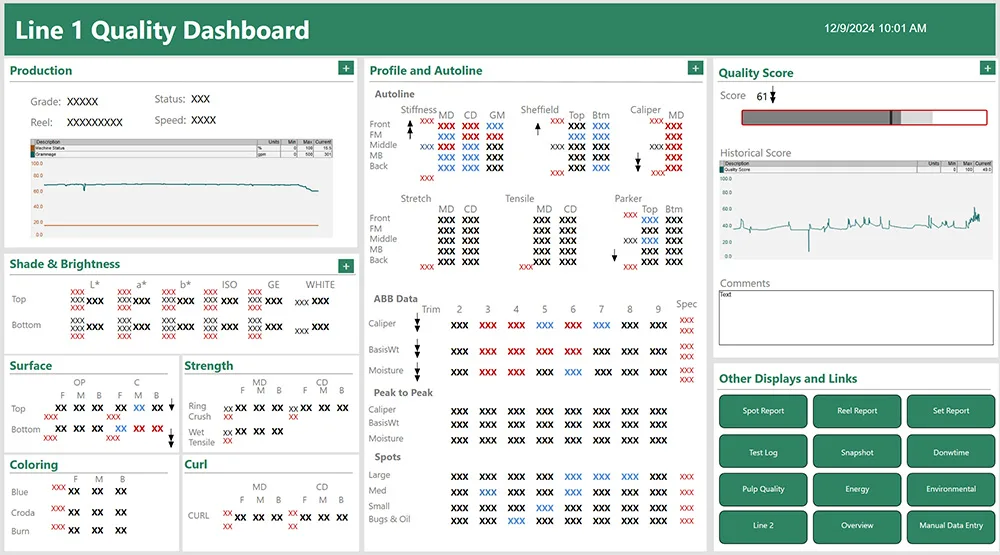
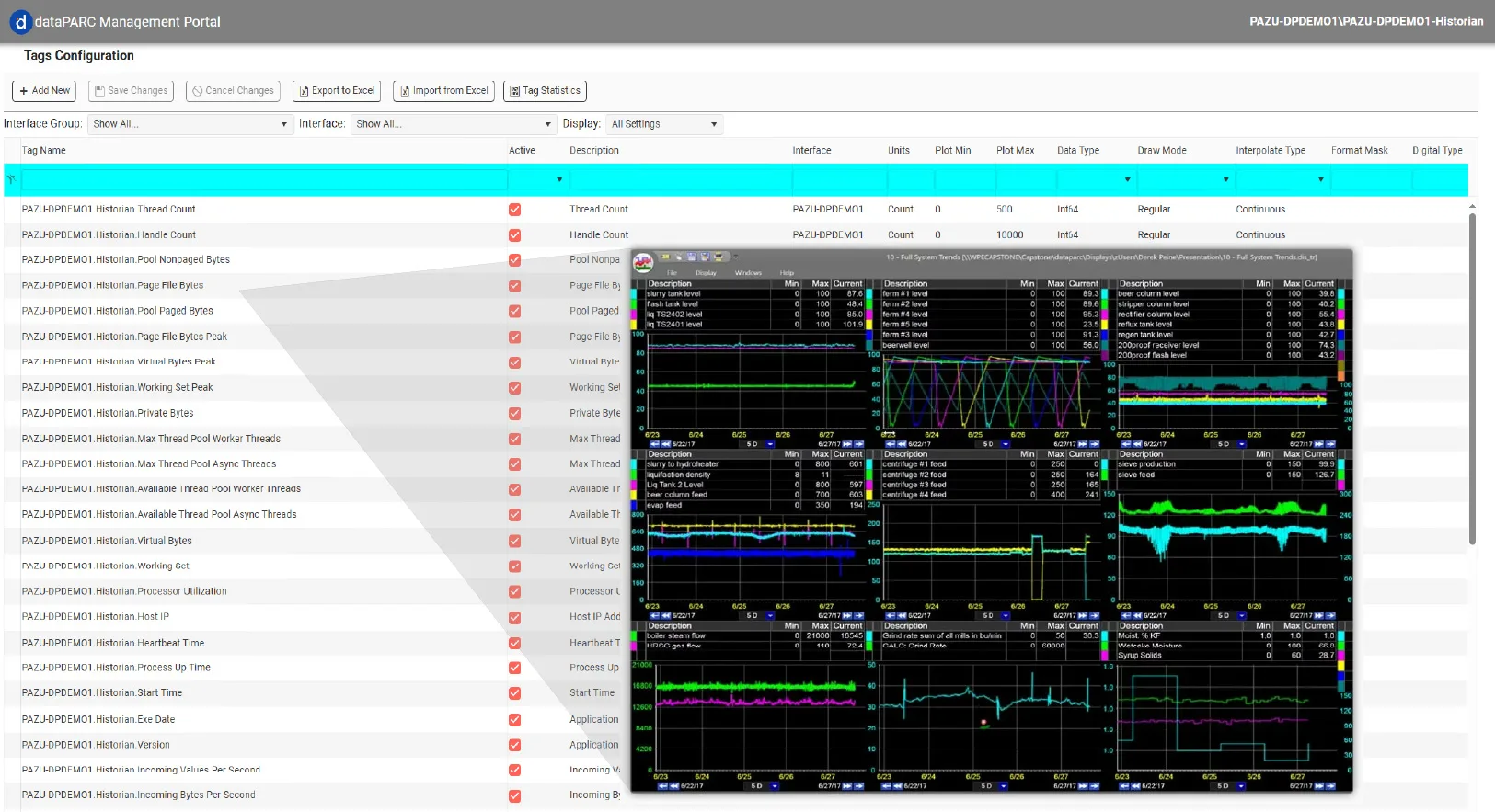
dataPARC’s graphics can be customized to include trends, buttons leading to other pages and color changing values based on specs all as native features without any advanced coding.
Enterprise Scalability and Multi-Site Standardization
Organizations expanding across facilities frequently encounter challenges deploying Canary at scale, particularly when enterprise standardization depends on custom pipelines and manual configuration replication.
dataPARC is designed for enterprise-wide deployment with centralized configuration, reusable templates, and standardized data models that support consistent analytics across sites. This enables faster rollout while reducing long-term maintenance complexity.
Performance, Compression, and Long-Term Scalability
As historian data volumes increase, performance and storage efficiency become critical considerations.
dataPARC is built for high-performance data retrieval and advanced compression strategies that support long-term scalability without sacrificing access speed. This ensures historical analysis remains responsive even as data volumes and user adoption grow. Rather than waiting minutes for a YTD dataset, dataPARC can provide it in seconds.
Licensing That Supports Enterprise Adoption
Canary’s per-tag licensing model provides an attractive entry price point, particularly for smaller deployments. However, as organizations expand data collection, integrate third-party analytics tools, and build custom infrastructure to fill functional gaps, the total cost of ownership can increase.
dataPARC’s enterprise-oriented licensing approach is designed to support broader user adoption and capability expansion without incremental complexity. By consolidating visualization, analytics, and contextual modeling within a single platform, organizations can reduce reliance on additional tools and better predict long-term costs.
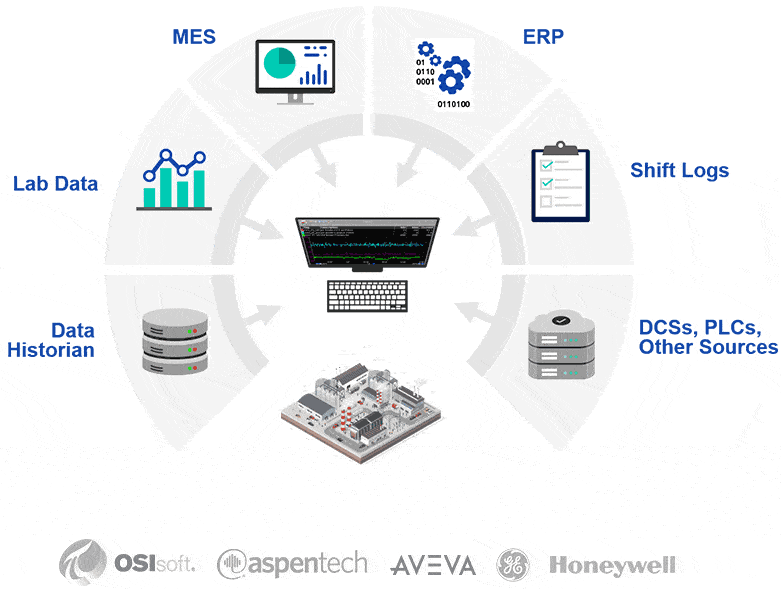
dataPARC connects all systems in a plant to a single visualiztion platform to allow users to run analtyics, view context and monitor the plant.
Supporting Complex Historian Environments and Migration
Many organizations evaluating alternatives have mature historian environments, including complex implementations built on platforms such as OSIsoft PI.
dataPARC supports integration with existing historians, enabling organizations to preserve historical investments while layering advanced analytics and visualization capabilities on top. This flexibility allows gradual migration strategies and reduces the risk associated with large-scale system transitions. Additionally, if a full replacement is the next step, the historical data can be backfilled to the dataPARC historian and preserved.
From Canary Historian to an Enterprise Analytics Platform
Evolving Without Disruption
The transition from a basic historian to an enterprise analytics platform is less about replacing technology and more about expanding capability. Organizations are moving from isolated data storage toward unified environments that deliver context, analytics, and operational intelligence at scale.
This evolution typically occurs when teams begin experiencing:
- Growth in data volume and user adoption
- Increasing multi-site standardization requirements
- The need for centralized data and asset models
- Greater reliance on analytics for process optimization
- Pressure to reduce custom-coded rollups and manual aggregation
- A desire to consolidate visualization and analytics into one platform
Platforms like dataPARC enable this progression by layering enterprise analytics capabilities on top of existing historian infrastructure, allowing organizations to evolve without sacrificing prior investments.
Migration Strategy: Transitioning from Canary
Most organizations do not migrate historians through a disruptive replacement project. Instead, they adopt a phased approach that prioritizes continuity and flexibility.
A common starting point is deploying dataPARC alongside the existing Canary Labs environment. This enables teams to validate analytics workflows, maintain historical access, and gradually shift users without interrupting operations.
As adoption grows, organizations introduce centralized asset models and standardized analytics to eliminate spreadsheet-based rollups and custom pipelines. Visualization and troubleshooting workflows are then consolidated into a unified environment, reducing reliance on third-party tools and improving investigation speed.
Because dataPARC supports interoperability with existing historians, teams can preserve historical archives and execute migration timelines aligned with operational priorities. The result is a gradual evolution where the historian expands into an enterprise analytics platform rather than being replaced outright.
Fast, scalable data historian at a fraction of the cost. Check out the dataPARC Historian.
Modernizing Historian Strategy with Confidence
The role of the historian is evolving. What once served primarily as a data collection system is now expected to support contextual analytics, enterprise visibility, and real-time operational decision-making.
Platforms like Canary Labs open the door for organizations beginning their historian journey. However, as operations expand across sites and data-driven initiatives mature, limitations in context, analytics, and scalability can begin to surface. For companies seeking a Canary historian alternative, solutions that offer enhanced enterprise analytics, richer context, and broader accessibility become increasingly valuable.
Transitioning to an enterprise analytics platform represents a natural progression rather than a disruptive shift. By introducing centralized data models, consolidating visualization and analytics workflows, and enabling broader organizational access to insights, manufacturers can transform historian data into a strategic asset.
Solutions like dataPARC support this evolution by delivering enterprise-grade data management, rich operator-focused analytics, and scalable performance within a unified environment. Through phased migration strategies and interoperability with existing historians, organizations can modernize their data ecosystem while preserving prior investments.
Ultimately, the goal is not simply to store more data but to unlock greater value from it. As manufacturers continue advancing toward predictive and optimization-driven operations, enterprise analytics platforms will play a critical role in turning process data into actionable intelligence that drives measurable performance improvement.
FAQ: Finding a Canary Historian Alternative
- How does dataPARC differ from smaller historians like Canary Labs?
dataPARC differs from smaller historians like Canary Laby by providing enterprise-grade data management, integrated analytics, operator-focused dashboards, and scalable performance, allowing manufacturers to turn raw historian data into actionable insights across the organization. - Can dataPARC work with existing Canary systems?
Yes, dataPARC can work with existing historians like Canary. dataPARC is designed to integrate with existing historians, enabling phased migration and interoperability so organizations can modernize their analytics without losing historical data. - What are the benefits of moving to an enterprise analytics platform?
Enterprise analytics platforms centralize data, consolidate visualization and reporting, provide context for operational decisions, and make insights accessible to a broader range of users, ultimately improving operational performance and predictive capabilities. - How can dataPARC help improve operational decision-making?
datPARC can help improve operational decision-making by providing contextual analytics, real-time dashboards, and alerts. dataPARC helps operators and managers identify trends, spot anomalies, and make informed decisions faster, leading to reduced downtime and optimized processes. - Why would a company look for a Canary historian alternative?
Companies often seek alternatives for a Canary historian when they need more advanced analytics, enterprise-wide visibility, scalability across multiple sites, or better contextual insights that go beyond basic data collection.
Building The Smart Factory
A Guide to Technology and Software in Manufacturing for a Data-Drive Plant