In this blog, we examine the relationship between Seeq’s advanced analytics capabilities and dataPARC’s operational data infrastructure, clarifying where these platforms complement each other and where critical gaps emerge. For organizations evaluating Seeq alternatives, understanding these differences is essential. Many organizations discover after implementing Seeq that powerful analytics tools assume you already have comprehensive data collection, storage, and organization-wide accessibility in place, infrastructure that analytics platforms aren’t designed to provide. Understanding what each platform does well, where they overlap, and how dataPARC fills the operational gaps Seeq leaves unaddressed helps you build a complete data infrastructure rather than leaving your organization with sophisticated tools that only specialists can use.
Check out dataPARC’s real-time process data analytics tools & see how better data can lead to better decisions.
Two Tools, Different Purposes
Seeq has established itself as a powerful advanced analytics platform for industrial time-series data, offering sophisticated ML/AI capabilities and deep statistical analysis that engineering teams value. But advanced analytics tools make a critical assumption: that you already have a comprehensive operational data infrastructure in place.
Many organizations discover this gap after implementing Seeq. The analytics platform performs brilliantly for the engineers and data scientists who use it, but the broader organization still struggles with basic operational visibility. Operators can’t easily access real-time trends. Quality teams lack simple dashboards. Maintenance doesn’t have the historical context they need for troubleshooting. The plant invested in advanced analytics, but daily operational needs remain unmet.
This isn’t a failure of Seeq. It’s simply not what the platform was designed to do. Seeq excels at answering complex analytical questions for specialists. It was never intended to serve as the operational data backbone that gives everyone in the organization access to the process information they need.
dataPARC fills this gap by providing what Seeq assumes already exists: a complete historian with integrated real-time visualization that serves the entire organization, from operators on the floor to engineers conducting investigations. Understanding where these tools complement each other and where dataPARC addresses needs, Seeq cannot help organizations build a complete data infrastructure rather than leaving critical gaps unfilled.
What Seeq Does Well (and Where it Struggles)
Seeq’s Strengths:
Seeq delivers exceptional value in its intended domain. The platform provides sophisticated analytics and native ML/AI capabilities specifically designed for time-series industrial data. Engineers and Data Scientists conducting deep investigations benefit from advanced statistical tools, pattern recognition, and predictive modeling that go far beyond basic trending.
For organizations with dedicated data science teams or complex process optimization initiatives, Seeq’s analytical depth is genuinely impressive. The platform’s workflow centers on creating conditions (called capsules) and visualizing them in powerful ways: trend views back-to-back, overlays, aggregates per condition, and X-Y plots per capsule. These capabilities enable sophisticated comparative analysis across production runs, batches, and operating conditions.
Seeq connects to existing historians and pulls data for analysis, making it an analytics overlay rather than a foundational infrastructure. For organizations that already have robust data collection and want to add advanced analytical capabilities, this approach makes conceptual sense.
Thinking about an Industrial Data Platform? Let our Smart Factory guide your way.
Seeq’s Limitations:
The challenges emerge not from what Seeq does, but from what it doesn’t do and how much it costs to use what it does provide.
Not a historian, requires existing infrastructure.
Seeq doesn’t collect data from control systems, store process measurements, or manage data integrity. It assumes this infrastructure already exists and functions reliably. Organizations without solid historian foundations discover they need to solve that problem first, creating a two-vendor architecture before analytics even begin.
Built for specialists, not operations.
The platform is designed for Engineers and Data Scientists, with interfaces and workflows optimized for technical users conducting investigations. This creates a steep learning curve that limits adoption beyond specialist teams. Operators, quality managers, and maintenance technicians find the platform too complex for their daily needs. Dashboard organization capabilities exist, but the focus remains on analytical depth rather than operational simplicity.
The adoption problem: purchased for the plant, used by 3-5 people.
Organizations frequently discover that the Seeq licenses they purchased sit largely unused. The common scenario plays out repeatedly: leadership invests in Seeq for plant-wide analytics, but only a handful of people actually use it regularly. The result is a powerful tool that serves a small subset of the organization while broader data access needs remain unaddressed.
Commercial model doesn’t scale with adoption.
This represents Seeq’s most significant limitation. As organizations try to expand usage beyond the initial specialist team, which is where the real value should emerge, pricing becomes untenable. The per-user licensing model that works for a pilot team of 5 becomes prohibitively expensive when scaling to 50 or 500 users across multiple sites. Recent Seeq pricing changes have accelerated this challenge, with many organizations discovering significant cost increases that forced reevaluation of their analytics strategy.
Connector complexity.
Managing connections between other systems and Seeq, replicating security models, and maintaining data flow creates administrative overhead. Organizations report challenges with connector reliability and the complexity of ensuring Seeq’s security model properly mirrors their historian’s access controls.
The fundamental issue isn’t that Seeq fails technically, it’s that the commercial model, security architecture, and specialist-only usability that creates barriers preventing most organizations from realizing the platform’s potential value across their operations.
How dataPARC Fills the Gaps
dataPARC provides what Seeq users need but don’t have: a complete industrial data platform where collection, visualization, and analytics work together in one integrated solution, without the commercial constraints and security concerns that limit Seeq adoption.
The dataPARC Historian
dataPARC includes industrial data collection with enterprise-scale architecture built in from the start. The dataPARC historian eliminates the need for separate infrastructure and the complexity of managing multiple vendor relationships. Sub-second data capture, efficient compression, store-and-forward capabilities, and data integrity features ensure reliable operational data collection and storage.
This cohesive ecosystem advantage matters significantly. Historian, visualization, and analytics exist in one platform with one interface, one licensing model, one support relationship. Organizations avoid the integration complexity and vendor coordination overhead that comes with separate historian and analytics products.
The security posture improves dramatically. dataPARC deploys on-premises or in customer-controlled private cloud environments, no SaaS cloud connection to OT layer required. This maintains the security boundary between operational technology and external systems that cybersecurity best practices demand. Organizations eliminate the exposure risk of cloud analytics platforms connecting directly to process historians.
Unlimited User Licensing
Organization-wide accessibility distinguishes dataPARC from analytics-focused platforms. Operators view real-time trends and historical data through intuitive interfaces requiring minimal training. Quality teams build dashboards for monitoring key parameters without needing engineering support. Maintenance accesses equipment history for troubleshooting. Engineers perform investigations using the same platform everyone else uses. The learning curve stays flat because the interface prioritizes operational simplicity over analytical complexity.
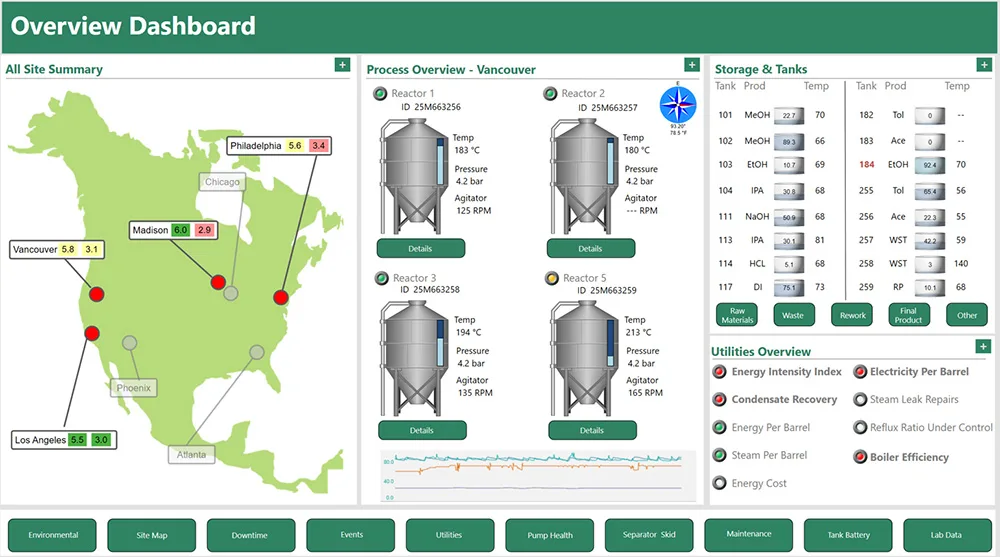
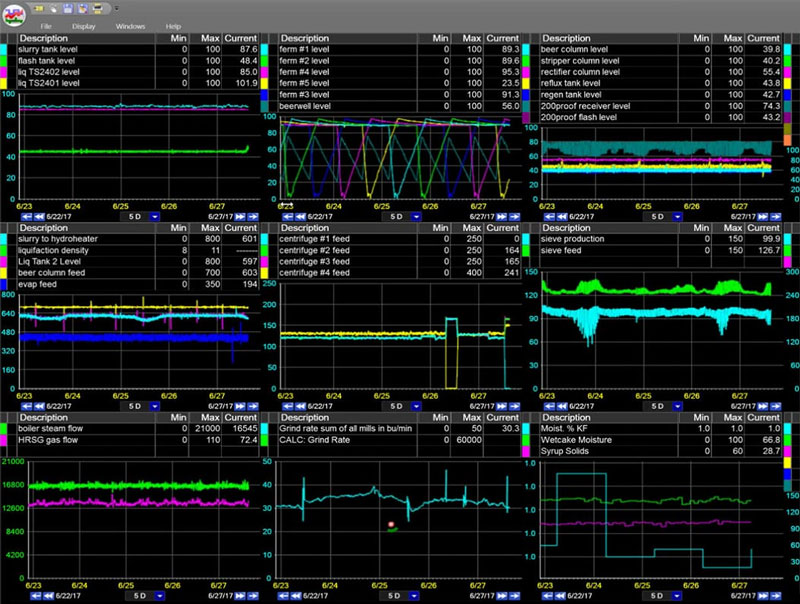
Production monitoring works best when everyone who needs it has access to the data, with interactive dashboards and trends.
Analytics for Everyone, Not Just Specialists
Comprehensive analytics without specialist expertise addresses the reality that most analytical needs don’t require Seeq’s depth. dataPARC’s calc engine, trending capabilities, and run browser tools handle most analysis that operations, quality, and engineering teams perform routinely. Comparing shifts, production runs, identifying correlations, tracking KPIs, and investigating deviations can all happen in PARCview. Organizations get analytical value immediately without requiring dedicated data science resources.
An Integration Solution
Advanced trending, customizable dashboards, and real-time monitoring exist natively in the platform. Engineers don’t export data to separate analytics tools for analysis. They trend multiple variables, identify correlations, and investigate issues directly in dataPARC. Operations teams don’t wait for specialists to create reports; they build their own dashboards with drag-and-drop simplicity.
Quality managers access process data alongside lab results without switching applications. Mobile access through PARCview Nexus extends the platform beyond the control room to wherever decisions happen. The visualization isn’t an afterthought bolted onto data collection. It’s integrated from the ground up with performance and usability that reflects that design philosophy.
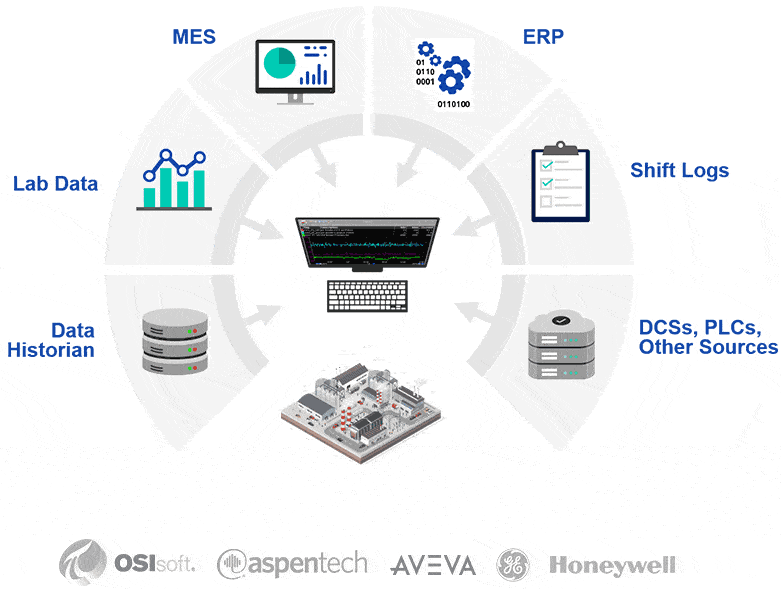
With dataPARC all your data is integrated in one place so you can see and analyze your data.
Organization-Wide Accessibility
This is where dataPARC fundamentally differs from Seeq’s specialist-focused approach. dataPARC serves everyone: operators viewing real-time trends, engineers conducting root cause analysis, quality teams monitoring process conditions, maintenance accessing equipment history, and management reviewing KPI dashboards.
Intuitive interfaces require minimal training. Role-based customization delivers relevant information without overwhelming users. Data democratization replaces specialist-dependent access. The commercial model supports this with tag-based licensing, which means unlimited users, adoption scales without cost penalties. Organizations can expand usage across sites and roles without the pricing becoming prohibitive.
Enterprise Architecture
Vertical synchronization moves data from plant historians to enterprise levels for corporate visibility. Horizontal synchronization provides fast, local performance to users in different geographies. A semantic layer ensures consistent meaning across sites; when one plant calculates efficiency, all plants use the same definition.
This enterprise scalability addresses the multi-site challenges that become expensive quickly in per-user licensing models. dataPARC’s architecture supports growth from single plants to global operations without the commercial model punishing success.
dataPARC doesn’t try to match Seeq’s analytical depth for specialist investigations. Instead, it provides the complete operational data foundation that makes daily decision-making data-driven across all roles while delivering sufficient analytical capability for most organizational needs.
dataPARC Covers SEEQ Use Cases
Run Browser Mirrors Seeq Capsules
Seeq’s primary analytical workflow centers on creating conditions, capsules, and visualizing them in powerful ways: trend views back-to-back, overlays, aggregates per condition, and X-Y plots per capsule. This capsule-based approach enables sophisticated comparative analysis across production runs, batches, and operating conditions.
dataPARC’s run browser with conditions provides functionally equivalent capabilities. Define your conditions, browse runs that meet those criteria, compare them side-by-side, overlay trends, and view aggregated statistics per run. The analytical patterns Seeq users rely on translate directly to dataPARC’s framework.
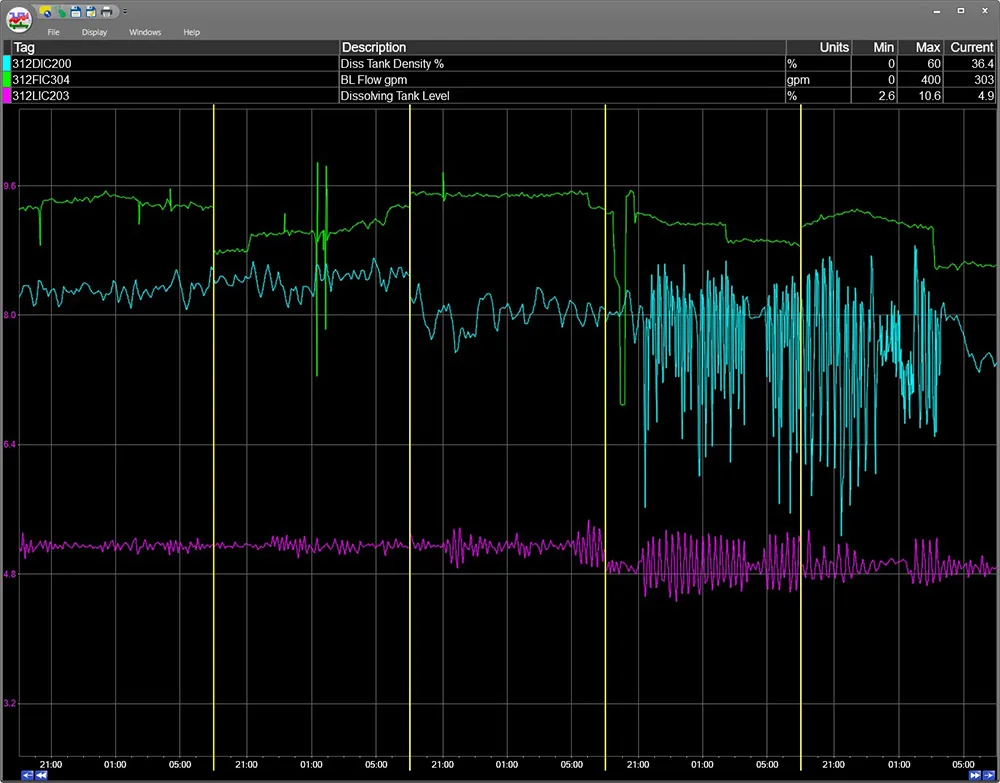
This dataPARC trend shows 5 runs separated by the yellow line. It appears in the last two runs the blue and purple tags became more erratic.
Near-Complete Use Case Coverage
Organizations migrating from Seeq discover dataPARC covers virtually all of the use cases they actually implemented. The deep analytics and sophisticated reports Seeq users create, trends, calculations, evaluations, comparative analyses, dataPARC handles them. Engineers conducting root cause investigations, comparing batch performance, or optimizing process parameters find the capabilities they need.
Some workflow differences exist. Certain operations may require more clicks than Seeq’s streamlined interface. Complex analyses sometimes need intermediate calculated tags as stepping stones rather than single expressions.
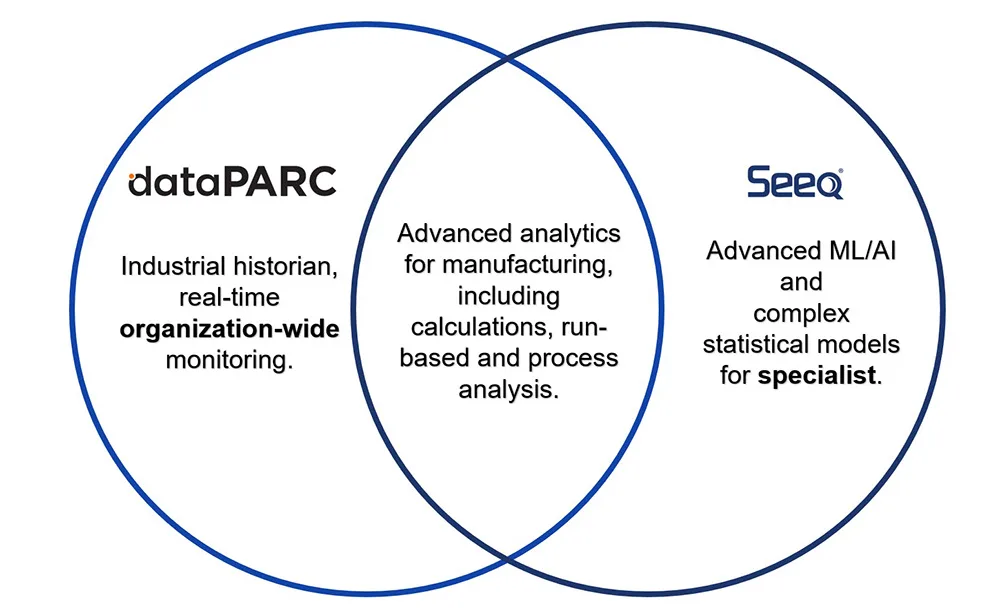
The overlap is real, but dataPARC’s analytics reach your entire organization, not just the engineering team.
The Practical Reality
What matters isn’t theoretical capability gaps, it’s whether dataPARC handles what organizations actually do with Seeq daily. The answer, consistently, is yes. Many organizations discover they were underutilizing Seeq’s most advanced capabilities. The analyses driving their decisions fall well within dataPARC’s integrated analytical framework.
The transition reveals a common pattern: organizations thought they needed Seeq’s specialized depth, but they actually needed comprehensive operational analytics accessible to more than just a few specialists. dataPARC delivers what they use without the cost, complexity, and adoption barriers that limited Seeq’s organizational impact.
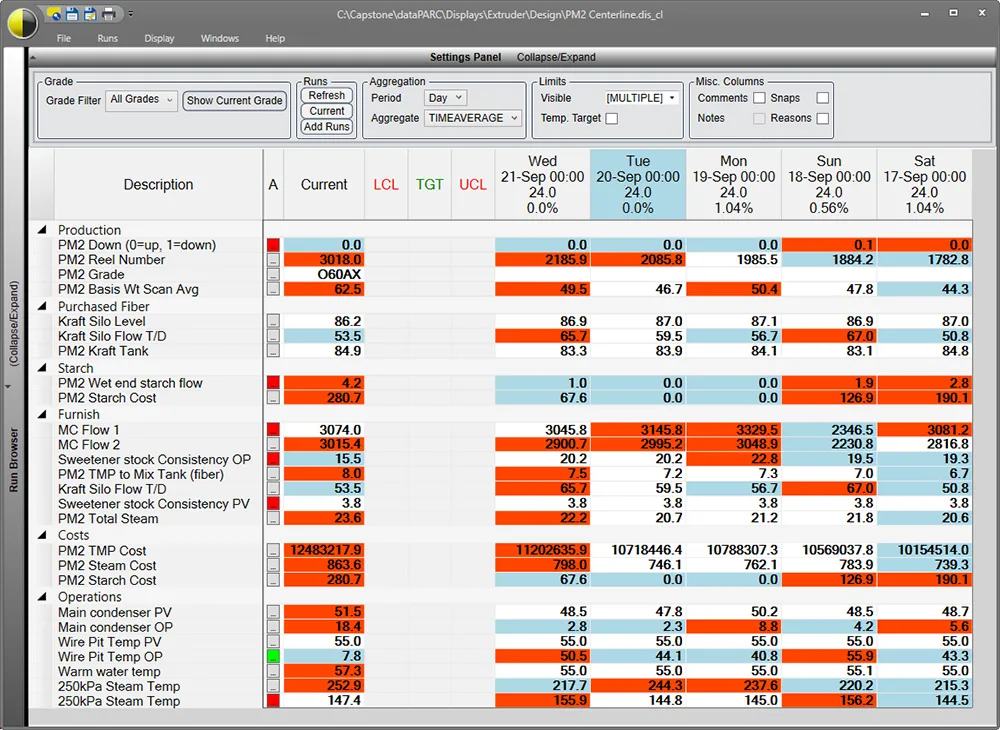
dataPARC’s unique Centerline display compares runs with statistical values like Time Average, Min, Max, etc. Colors help identify which values are above or below the average runs for quick troubleshooting.
Why Organizations Switch from SEEQ to dataPARC
Organizations switching from Seeq aren’t dissatisfied with technical capabilities, they’re reacting to commercial realities that make Seeq unsustainable as adoption scales.
The Cost Scaling Problem
The pattern repeats across industries: a company implements Seeq for analytics. Engineers find value. Leadership wants to expand across more sites and users. Then pricing reality hits. Seeq’s per-user commercial model doesn’t scale affordably. What worked financially for a pilot team of five becomes untenable when scaling to fifty users across multiple sites.
Recent Seeq pricing changes accelerated this trend. Organizations that budgeted based on previous costs discovered significant increases forcing reevaluation. Companies report being “quite happy with Seeq” technically, but costs became untenable as they tried scaling adoption. When the tool supposed to drive efficiency becomes a major cost center itself, the business case collapses.
Seeq creates a frustrating paradox: it’s most valuable when widely adopted, but commercial constraints prevent that adoption. Organizations want entire engineering teams leveraging analytics, but per-user costs make that prohibitive. Scaling across facilities drives expenses beyond ROI thresholds. The platform succeeds technically while failing commercially to support the scale where value compounds.
The dataPARC Alternative
dataPARC solves the commercial challenge with tag-based licensing, which means unlimited user adoption scales without cost penalties. Built-in historian eliminates the need for separate infrastructure and two-vendor complexity. Organizations get Seeq-equivalent analytical capabilities with commercial models that actually support enterprise-wide adoption rather than constraining it.
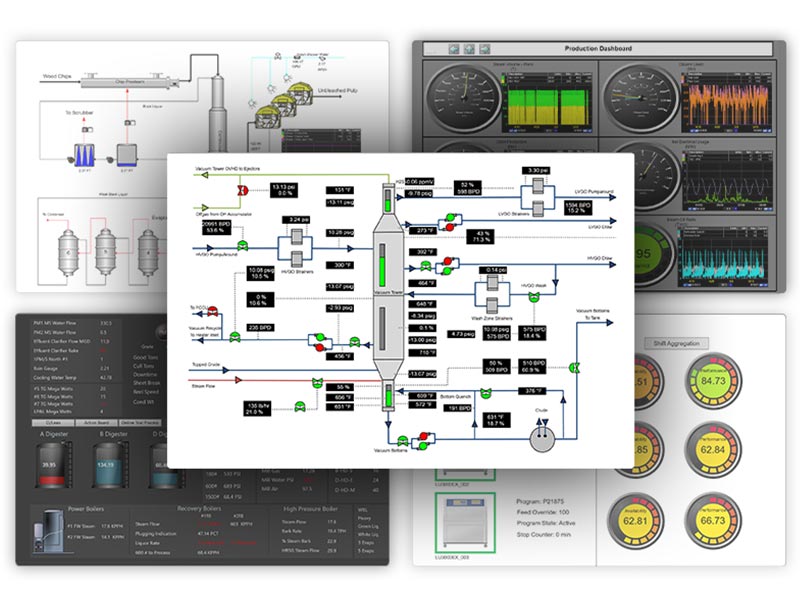
Superior ad-hoc analytics tools, faster performance, lower cost… see why dataPARC is a better choice than competitors for process data visualization & analysis.
Conclusion: Complete Your Data Stack
The question isn’t whether Seeq or dataPARC is better, it’s what your organization actually needs and in what order you build your data capabilities.
Seeq provides specialized tools for engineers conducting complex statistical investigations. dataPARC provides comprehensive infrastructure with integrated analytics serving everyone in the organization, delivering the capabilities most facilities actually use daily while also providing the historian and operational visibility Seeq assumes already exists.
Advanced analytics only deliver value when built on solid data infrastructure. Organizations investing in analytics platforms before establishing operational foundations discover expensive tools sit underutilized. Most organizations need dataPARC’s comprehensive foundation first, complete historian functionality, organization-wide access, and operational simplicity that drives immediate value. These benefits materialize quickly because dataPARC serves everyone, not just specialists, with commercial models that support scaling adoption rather than punishing it.
The mistake is investing in specialist tools without operational systems everyone can use. A platform only three engineers touch doesn’t transform decision-making. Complete infrastructure that operators, quality, maintenance, and engineering rely on daily creates competitive advantage.
If operators struggle accessing trends, if quality can’t compare production runs, if engineers waste hours gathering data, if Seeq costs make scaling untenable—your gap is infrastructure, not advanced analytics. dataPARC fills that gap while delivering analytical capabilities sufficient for most operational needs.
Ready to see how dataPARC handles your Seeq use cases? Request a demo to validate coverage and discuss commercial terms that support organization-wide adoption.
FAQ Seeq Alternatives
- Is dataPARC a good Seeq alternative?
dataPARC serves as an excellent Seeq alternative for organizations that need a complete data infrastructure, historian, organization-wide visualization, and operational analytics, rather than specialized analytical depth. While Seeq focuses on advanced analytics for engineers and data scientists, dataPARC provides the foundational data collection, storage, and accessible analysis that serves entire organizations. If your priority is democratizing data access and handling daily analytical needs comprehensively, dataPARC is the best choice. - Does dataPARC have a historian, or does it connect to historians like Seeq?
dataPARC includes a complete industrial data historian that collects, stores, and manages data directly from control systems. Unlike Seeq, which connects to existing historians as a data consumer, dataPARC provides the foundational data infrastructure, eliminating the need for separate historian products. - Is dataPARC too simple for engineering analysis?
No, dataPARC is not too simple for engineering analysis. dataPARC provides robust analytical capabilities, including multi-variable trending, XY Plot, calculated tags, statistical functions, and run analysis that engineers rely on for troubleshooting, optimization, and process improvement. The difference is that these capabilities are designed to be accessible to all roles, not just specialists, without sacrificing analytical depth for operational decision-making. - Can Seeq and dataPARC work together?
Yes. Some organizations run dataPARC as their operational foundation (historian, organization-wide visualization, daily analytics) while specialists use Seeq for investigations that require even more advanced statistical capabilities. dataPARC provides the data infrastructure and broad accessibility, while Seeq adds depth for specialized analysis when needed.
Building The Smart Factory
A Guide to Technology and Software in Manufacturing for a Data-Drive Plant